2016 | Review: Questioning Citizenship at the Venice Biennale
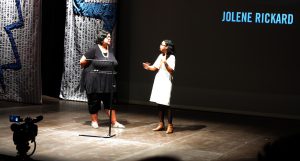 This past August, during a steamy morning in Venice, I listened to visual historian, artist and curator Jolene Rickard address an international crowd of cultural provocateurs on the concept of wampum. Rickard is of the Tuscarora Nation and on that particular day she was speaking as part of the Creative Time Summit “Geography of Learning” session. For an audience seeking transformative knowledge, she affirmed “Indigenous cultures are art and today we use art as our wampum belt for change.”
Many speak on the deep knowledge that is embedded in wampums like the Kaswhenta (Two Row Wampum).1
I have listened to knowledge keepers “read” the belts on land that is traditionally Haudenosaunee and Anishinaabe. It is poignant to hear the wampums explained in areas historically implicated in breaking the agreements they represent. The words are moving because they offer pathways forward to right relations between Indigenous and non-Indigenous peoples, many who have arrived as newcomers in search of freedom. This time the words hung suspended in ambiguity. Venice is at a great distance from the lands the wampums represent. On the grounds of the Biennale, with its bordered spaces promoting patriotism and its flag-waving, the concepts of wampum were difficult to link to the critique of nation states’ relations with immigrants, migrants and refugees – the theme of both the Summit and the Biennale. Rickard was tasked with inserting Indigenous concepts and symbology into a location dominated by signifiers of colonization and to a crowd largely unaware of the deep history wampums represent. She also only had 10 short minutes to do this. Without the reinforcement of other Indigenous perspectives challenging representations of belonging, her task was not easy. Separated from the insight provided when located on the land the wampum is referencing, it became apparent how symbols, like flags, inundate our understanding (or misunderstanding) of peoples’ connection to place.
Read the full reflection along with reflections by other contributors – Adrian Blackwell, Elle Flanders, Justin A. Langlois, Tamira Sawatsky, Amanda Shore, Rinaldo Walcott – on C Magazine.
- The Kaswhenta, or Two Row Wampum is one of the oldest recorded wampum agreements between Indigenous people and Europeans, negotiated in 1613 (in this case, the Haudenosaunee and the Dutch). The Two Row Wampum depicts lines of white and purple shell beads. Two purple rows signify a canoe and a ship traveling side by side in the river of life. It represents agreements based on the ideas of mutual respect and noninterference.
IMAGE: Leah Snyder