About
“Water has the taste of the gift of song that blows from memory’s gardens.”
Mahmoud Darwish

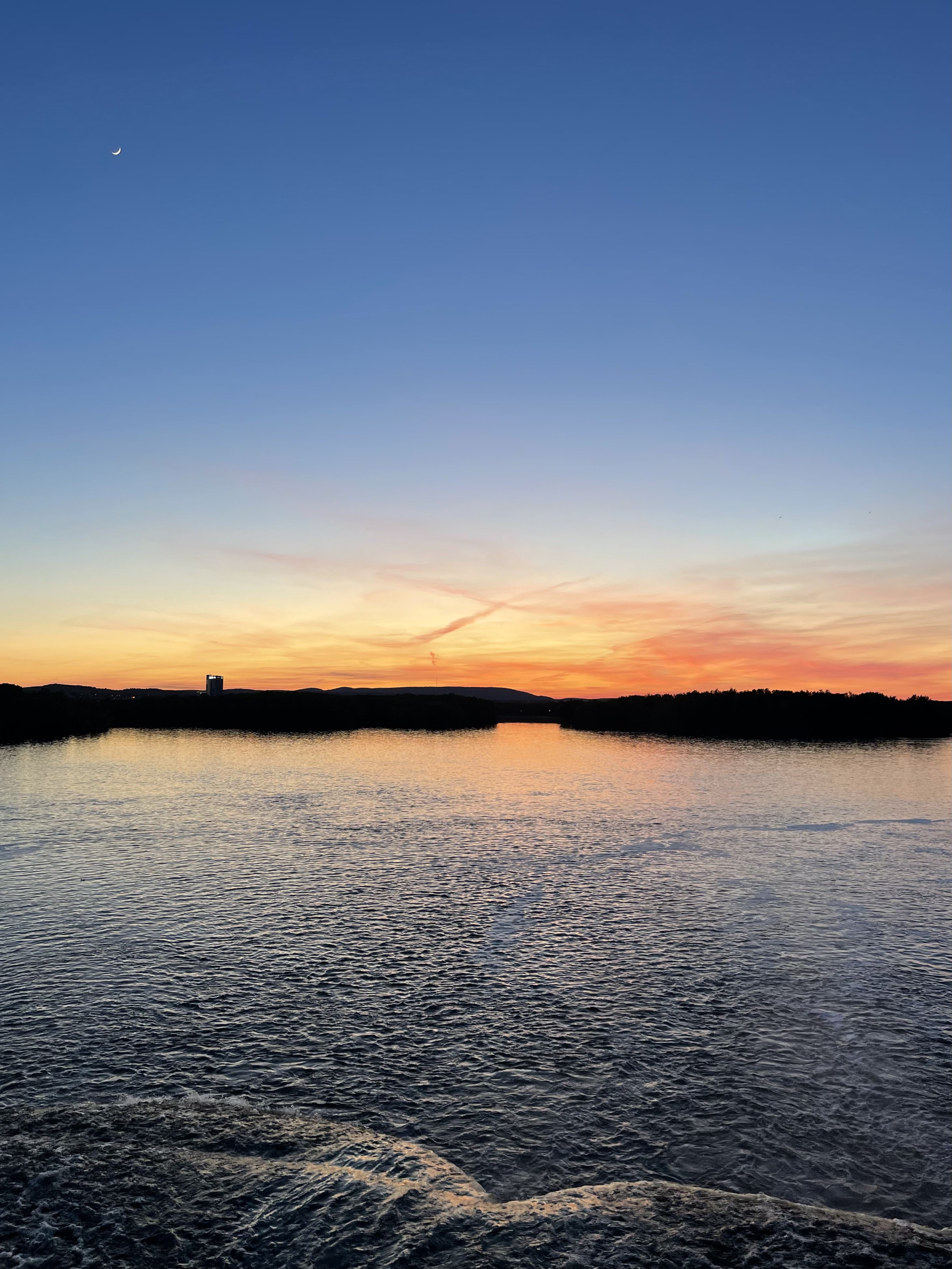
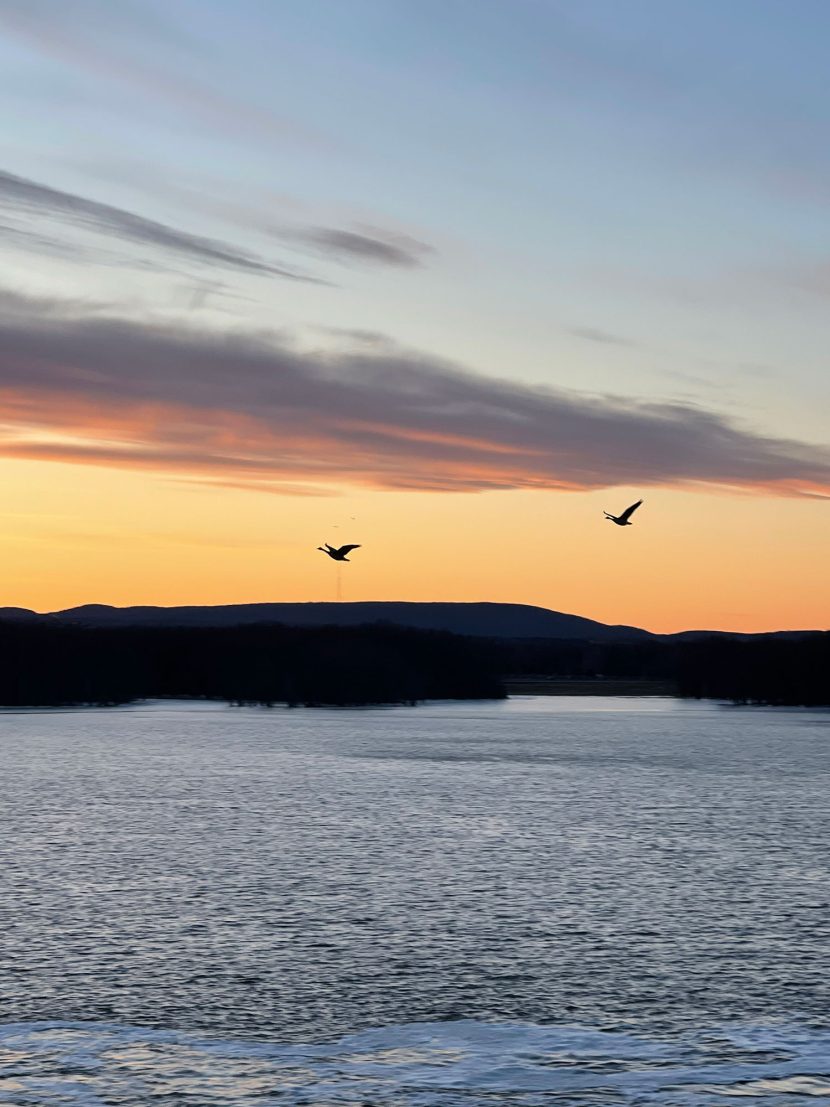
I live at the edge conditions, in the unceded aki (land) of the Algonquin Anishinaabe, where the waters of the confluence of three rivers – Kichi Zìbì (Ottawa River), Tenàgàdino Zìbì (Gatineau River), Pasāpikahigani Zìbì (Rideau River) – merge as one. Here the horizon feels limitless, the skies epic, a portal to the profound. The curvy ridge of the Gatineau hills beyond receives the shadows of clouds passing over the terrain.
Also here, in Canada’s National Capital Region, the interprovincial border is the flow of water, the architecture of the state dominates, and narratives of Canadian nationalism overtake other stories and histories. And yet the shorelines, even in the urban space, counterbalance these colonial architectures providing respite and wonder. My practice has shifted in part because of what these edge conditions offer.
Working with artists whose work counters dominant narratives, my own digital design, writing, and curatorial focus has deepened with such collaborations and engagement. Currently, as a graduate student in architecture and urbanism, my research considers how immersive digital technologies, and the artists that use them, can contribute to spatial justice in urban environments through digital storytelling.11
With my practice I also look at the ways digital stories convey the poetics of placemaking along with the ways in which artists reveal how the liminal space at the water’s edge functions as a contact zone.22
When not thinking about art or technology, I can be found walking along and through the edge conditions.
1 Mehan, Asma, and Mostafavi, Sina. (2024) Spatial justice through immersive art: an interdisciplinary approach, in Gray, C., Hekkert, P., Forlano, L., Ciuccarelli, P. (eds.), DRS2024: Boston, 23–28 June, Boston, USA. https://doi.org/10.21606/drs.2024.302
2 “social spaces where cultures meet, clash, and grapple with each other, often in the contexts of highly asymmetrical relations of power, such as colonialism…”; Pratt, Mary Louise. “Arts of the Contact Zone.” Profession, 1991, pp. 34. jstor.org/stable/25595469
IMAGES: Leah Snyder